
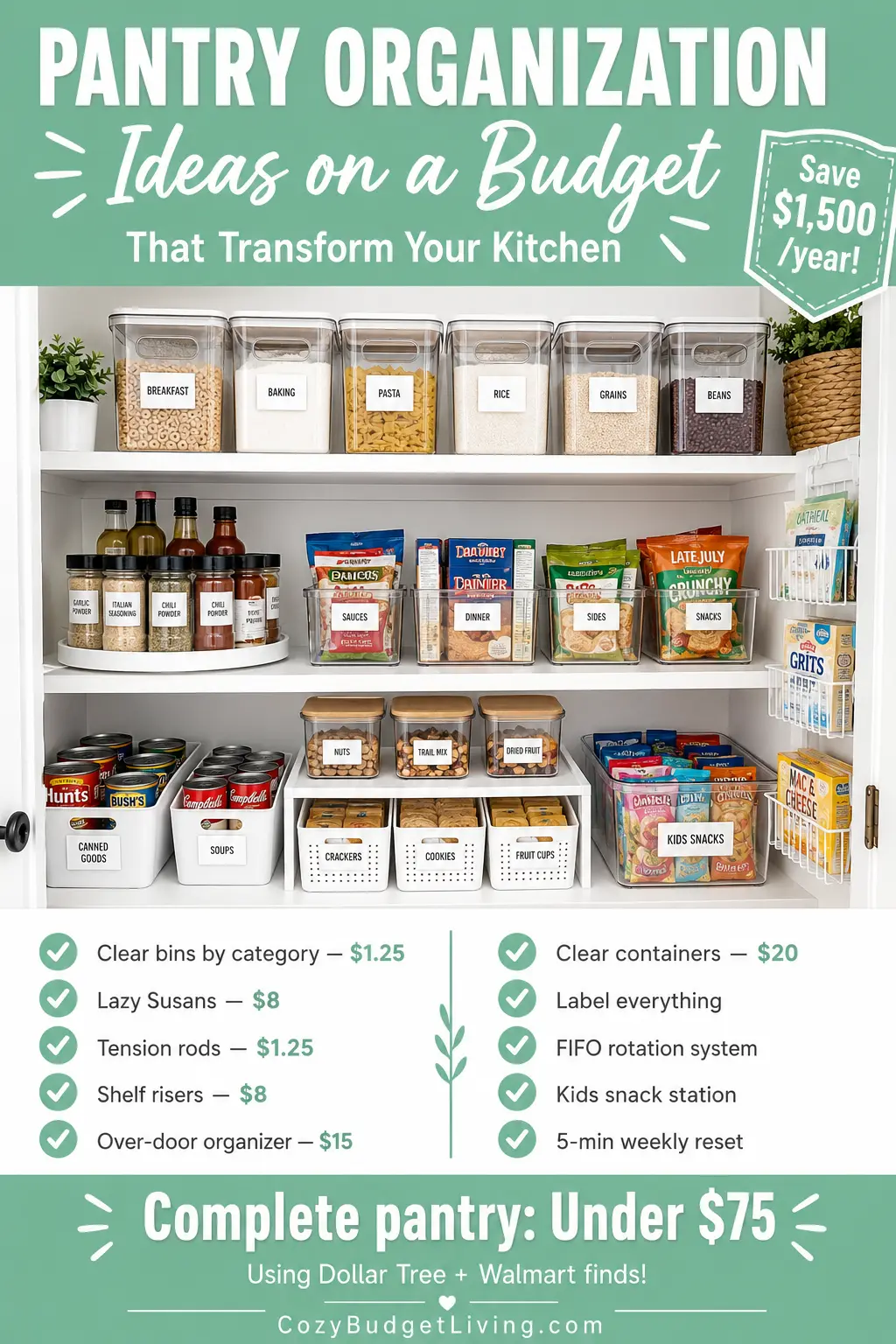
If you have been avoiding opening your pantry because you know exactly what is in there — chaos — this guide is written specifically for you.
Pantry organization ideas on a budget are not about buying expensive custom shelving systems or spending hundreds of dollars on matching containers that make your pantry look like a magazine spread. They are about creating a genuinely functional system that you can actually maintain — one where you can find what you need immediately, know what you have before grocery shopping, and stop throwing away expired food you forgot you owned.
The average American family wastes $1,500 worth of food every year — much of it because pantry disorganization means items get pushed to the back, forgotten, and eventually expired before they are ever used. A well-organized pantry on a tight budget does not just look better — it actively saves your family real money every single month.
These pantry organization ideas on a budget use Dollar Tree finds, IKEA basics, Walmart solutions, and items you likely already own to create a pantry that functions beautifully for under $50 to $75 total.
Contents
- 1 Why Pantry Organization Saves You Real Money
- 2 Step 1: Declutter Your Pantry Before Organizing
- 3 Idea #1: Use Clear Bins to Group by Category — $15–$25
- 4 Idea #2: Install a Tension Rod for Vertical Storage — $2–$5
- 5 Idea #3: Use Lazy Susans for Corner and Deep Shelf Access — $8–$20
- 6 Idea #4: Decant Dry Goods Into Clear Containers — $20–$40
- 7 Idea #5: Add a Over-Door Organizer — $10–$25
- 8 Idea #6: Create a First-In-First-Out System
- 9 Idea #7: Use Shelf Risers to Double Your Space — $8–$20
- 10 Idea #8: Create a Snack Station for Kids
- 11 Idea #9: Label Absolutely Everything
- 12 Idea #10: Maintain With a 5-Minute Weekly Pantry Reset
- 13 Complete Budget Breakdown
- 14 Frequently Asked Questions
- 15 Q: What is the most impactful pantry organization idea on a budget?
- 16 Q: How do I organize a small pantry on a very tight budget?
- 17 Q: How do I keep my pantry organized with a large family?
- 18 Q: Is it worth buying matching containers for pantry organization?
- 19 Q: How long does it take to organize a pantry from scratch?
- 20 Conclusion
Why Pantry Organization Saves You Real Money
Before diving into specific pantry organization ideas on a budget, it is worth understanding the financial case for organizing your pantry — because the savings are more significant than most people realize.
Stop buying duplicates: When you cannot see what you have, you buy more of things you already own. Most disorganized pantries contain three open boxes of the same pasta, four partially used bags of rice, and multiple cans of the same soup bought because they were not visible during the weekly grocery shop.
Reduce food waste: The $1,500 average annual food waste figure is driven primarily by items pushed to the back of pantries and forgotten until they expire. A pantry where everything is visible eliminates most of this waste immediately.
Enable better meal planning: When you can see exactly what you have, meal planning becomes faster and grocery lists become more accurate — reducing both overbuying and forgotten ingredient purchases.
Reduce impulse grocery purchases: Knowing what you actually have before shopping prevents the “we might need this” purchases that inflate grocery bills by 20 to 30 percent.
The financial return on a $50 pantry organization investment is genuinely significant — most families recoup the entire cost within the first month through reduced food waste and fewer duplicate purchases.
Step 1: Declutter Your Pantry Before Organizing
The most important pantry organization idea on a budget is also the only free one — and it must happen before you buy or install anything else.
Pull every single item out of your pantry and place it on your kitchen counter or table. Every item. Nothing stays in without earning its place back.
As you review each item, ask:
Is it expired? Throw it away immediately — no second thoughts. Is it something your family actually eats? If not — donate to a food bank. Is it a duplicate of something else? Consolidate open packages into one. Is it a special ingredient bought for one recipe you made two years ago and will never make again? Donate or discard.
What most people discover during this step:
The average pantry declutter eliminates 30 to 40 percent of pantry contents — creating dramatically more space than any new storage solution would. Most people also discover $30 to $80 worth of usable food they had forgotten about — ingredients that become the foundation of the next week’s meals.
Do not skip this step. Organizing clutter simply makes the clutter harder to find.
Idea #1: Use Clear Bins to Group by Category — $15–$25
The single most impactful pantry organization idea on a budget — and the one that delivers immediate, dramatic visual improvement — is grouping similar items into clear bins.
The category system:
Pull everything into groups — baking supplies together, canned goods together, pasta and grains together, snacks together, condiments together, breakfast items together. Then place each group into a clear bin that keeps them together, visible, and contained.
Why clear bins work:
When you need baking supplies, you grab the baking bin — everything you need is in one place. When you are building a grocery list, you look in each bin and immediately see what is running low. When you put groceries away, every item has an obvious designated home.
Budget clear bin options:
Dollar Tree carries clear plastic bins in multiple sizes for $1.25 each — buying ten to twelve bins for a complete pantry system costs $12.50 to $15.00.
Walmart carries larger clear storage containers in sets for $15 to $25 — better for larger pantries or deeper shelves.
IKEA’s KUGGIS boxes ($3 to $8 each) are excellent quality and stack beautifully for vertical pantry organization.
Label every bin — use a label maker ($15 to $20 at Walmart) or simple chalkboard labels ($1.25 at Dollar Tree) so every family member knows exactly where everything belongs and puts it back correctly.
Idea #2: Install a Tension Rod for Vertical Storage — $2–$5
This is the pantry organization hack on a budget that consistently surprises people with how effective it is — and it costs barely anything.
Install a tension rod horizontally across a pantry shelf. Hang spray bottles, cleaning supplies stored in the pantry, or bags of snacks from the rod using S-hooks or by draping the bags over the rod.
Alternative tension rod uses in the pantry:
Place two parallel tension rods across a shelf to create a rack for holding pot lids vertically — the same way you would store files. This creates organized vertical storage for lids that previously took up an entire shelf lying flat.
Use a tension rod to create a second level within a tall shelf space — effectively doubling the usable shelf space in pantries with high shelves and small items that do not use the full height.
A tension rod from Dollar Tree costs $1.25. This is genuinely one of the highest-return pantry organization investments available.
Idea #3: Use Lazy Susans for Corner and Deep Shelf Access — $8–$20
Corner pantry shelves and deep pantry shelves share a common problem — items at the back get pushed behind items at the front and disappear for months. The lazy Susan solves this completely.
A lazy Susan placed on any pantry shelf spins to bring items at the back directly to the front. You never need to move twelve items to reach the one you need again.
Best lazy Susan uses in the pantry:
Corner shelves — the obvious use. Deep shelves where canned goods, jars, and condiments get pushed to the back. Spice storage — a round lazy Susan holds 20 to 30 spice jars and spins to bring any spice immediately to the front. Under-shelf areas in pull-out pantry drawers.
Budget lazy Susan options:
Dollar Tree carries small lazy Susans for $1.25. Walmart has larger versions for $8 to $15. Two-tier lazy Susans — which maximize vertical space as well — cost $15 to $25 at Walmart or Amazon and are worth every penny for spice storage.
Idea #4: Decant Dry Goods Into Clear Containers — $20–$40
This is the pantry organization idea that makes the most dramatic visual difference — and that delivers the most practical organizational benefits simultaneously.
Decanting means transferring dry goods from their original packaging into clear, matching containers. Rice from the bag into a labeled clear jar. Pasta from the box into a clear canister. Cereal from the box into a clear container.
Why decanting works:
You can see exactly how much you have at a glance — no opening bags or shaking boxes. Everything takes up less space because you eliminate the excess packaging. Pests cannot access food stored in sealed containers. Everything looks significantly more organized and intentional. Items stay fresher longer in airtight containers than in opened bags and boxes.
Budget decanting options:
Dollar Tree carries clear plastic canisters with lids for $1.25 each. A complete set of ten containers costs $12.50 and organizes your entire dry goods section.
Walmart carries OXO pop-top containers in sets for $20 to $40 — these are the gold standard of pantry containers and genuinely worth the investment if your budget allows.
IKEA carries glass jars in sets for reasonable prices that look beautiful and last indefinitely.
What to decant first: Flour, sugar, rice, rolled oats, pasta, dried beans, cereal, coffee, tea, and nuts are the most impactful items to decant because they are used regularly, frequently run out without warning, and take up disproportionate space in their original packaging.
Idea #5: Add a Over-Door Organizer — $10–$25
The inside of your pantry door is prime storage real estate that most people leave completely unused. An over-door organizer on your pantry door creates immediate significant storage for items that are cluttering your shelves.
Best items for pantry door organizers:
Spices — a door-mounted spice rack keeps all your spices visible, accessible, and off your shelves simultaneously. Aluminum foil, plastic wrap, and parchment paper boxes — these awkward flat boxes take up disproportionate shelf space but fit perfectly in door pockets. Small snack items — individual granola bars, packets of oatmeal, small bags of nuts. Cleaning supplies stored near the kitchen. Onions and garlic in mesh pockets that allow air circulation.
Budget over-door organizer options:
Walmart carries basic over-door pantry organizers for $10 to $15. More substantial options with multiple adjustable pockets cost $20 to $30 at Amazon. Dollar Tree has simple door hooks ($1.25 each) that hold lightweight items.
Idea #6: Create a First-In-First-Out System
This pantry organization idea costs nothing — but it consistently saves families $50 to $150 per month in reduced food waste.
First-in-first-out (FIFO) is the same system grocery stores and restaurants use to prevent food waste — newest items go to the back, oldest items go to the front. When you reach for something, you always grab the oldest item first, ensuring nothing expires before it is used.
How to implement FIFO in your pantry:
When putting away new groceries, move existing items forward and place new items behind them. This takes an extra thirty seconds per grocery trip and eliminates virtually all pantry food waste related to forgotten items.
Stacking can organizers — $10 to $15 at Walmart — automate this process for canned goods. New cans are loaded from the top, old cans dispense from the bottom. Everything rotates automatically with zero additional effort.
Idea #7: Use Shelf Risers to Double Your Space — $8–$20
Most pantry shelves have 12 to 18 inches of vertical space between levels — space that is only partially used by the items stored there. A shelf riser placed on the shelf creates a second level within the same shelf space, effectively doubling your usable storage.
Best shelf riser uses in the pantry:
Canned goods — stack a second row of cans on the riser behind the first row, making all cans visible simultaneously. Small jars and containers — store two rows of spices, condiments, and small jars without any item hiding behind another. Baking supplies — baking powder, baking soda, vanilla extract, and similar small items organized on a riser become instantly accessible.
Budget shelf riser options:
Dollar Tree carries simple plastic shelf risers for $1.25 each. Walmart has expandable wire shelf risers for $8 to $15 that adjust to different shelf widths. Bamboo shelf risers ($12 to $20 at Amazon) look beautiful and are extremely durable.
Idea #8: Create a Snack Station for Kids
If you have children, a dedicated snack station is one of the most practically impactful pantry organization ideas on a budget — because it gives kids an organized, designated area where they can independently find and access their approved snacks without disturbing the rest of the pantry system.
How to create a budget kids snack station:
Designate one low shelf or one clear bin as the snack station. Fill it with pre-portioned, kid-approved snacks — individually bagged portions of crackers, small bags of popcorn, fruit pouches, granola bars, and similar items.
Place the snack station at a height children can reach independently — which also removes the constant parenting interruption of “Mom, what can I eat?”
A simple clear bin from Dollar Tree ($1.25) labeled “SNACKS” is all you need. The organizational benefit — and the reduction in pantry disturbance — is immediate and significant.
Idea #9: Label Absolutely Everything
Labeling is the step most people skip in pantry organization — and it is the step that determines whether your organized pantry stays organized or gradually reverts to chaos within two to three weeks.
When everything is labeled, every family member knows exactly where things belong and puts them back correctly. Without labels, the system depends on everyone remembering where everything goes — which never works consistently.
Budget labeling options:
Label maker from Walmart — $15 to $20. Creates clean, professional-looking labels that last for years. Chalkboard labels from Dollar Tree — $1.25 for a pack. Write with chalk marker, wipe clean and relabel when needed. Washi tape and a marker — free if you already own these. Colored tape strips with written labels work perfectly. Printable labels from free online templates — print at home and attach with clear tape.
What to label:
Every bin, container, and basket. Every shelf zone — “Baking,” “Canned Goods,” “Snacks,” “Breakfast,” “Pasta + Grains.” Every decanted container — including the contents and the expiration date.
Idea #10: Maintain With a 5-Minute Weekly Pantry Reset
A beautifully organized pantry stays beautiful only if you maintain it — and the maintenance required is far simpler than most people expect.
Once per week — ideally just before grocery shopping — spend five minutes on a pantry reset. Move items back to their designated zones. Check for items approaching expiration that need to be used soon. Note what is running low for the grocery list. Wipe down any visible spills or crumbs.
Five minutes per week prevents the gradual drift back to chaos that undoes hours of initial organization work. It is the single most important habit for maintaining long-term pantry organization.
Complete Budget Breakdown
| Pantry Organization Solution | Cost |
|---|---|
| Clear bins for categories (10) | $12.50–$25 |
| Tension rods (2) | $2.50–$5 |
| Lazy Susans (2) | $2.50–$30 |
| Clear decanting containers (10) | $12.50–$40 |
| Over-door organizer | $10–$25 |
| Stacking can organizer | $10–$15 |
| Shelf risers (3) | $3.75–$20 |
| Labels and label maker | $5–$20 |
| Total complete pantry | $59–$180 |
Dollar Tree solutions bring total to under $50. Mix of Dollar Tree and Walmart brings to $75-$100.
Frequently Asked Questions
Q: What is the most impactful pantry organization idea on a budget?
Clear bins grouped by category deliver the most immediate and dramatic improvement for most pantries — both visually and functionally. When similar items are grouped together and visible, finding things becomes instant and grocery shopping becomes more intentional. Start with bins before any other organizational product.
Q: How do I organize a small pantry on a very tight budget?
Start with the free step — decluttering. Most small pantries contain 30 to 40 percent more than they need to. After decluttering, add $1.25 Dollar Tree clear bins and a few tension rods for under $15 total. These two investments solve most small pantry organizational challenges without spending more.
Q: How do I keep my pantry organized with a large family?
The key elements for large family pantries are clearly labeled bins for each category, a dedicated kids snack station that children can access independently, the FIFO (first-in-first-out) rotation system for canned goods, and a weekly five-minute reset. The snack station alone dramatically reduces pantry disturbance for families with children.
Q: Is it worth buying matching containers for pantry organization?
Matching containers create a significantly more visually pleasing pantry — and research suggests that a more attractive pantry is also a more consistently used and maintained pantry. However, Dollar Tree containers at $1.25 each are sufficient for the organizational function. If budget allows, upgrading to matching OXO or IKEA containers is worthwhile but not necessary for a functional system.
Q: How long does it take to organize a pantry from scratch?
A complete pantry organization from start to finish — decluttering, installing organizers, decanting, and labeling — typically takes three to four hours for an average-sized pantry. Spread across a Saturday morning with a brief shopping trip to Dollar Tree or Walmart the day before, the entire project is achievable in a single weekend.
Conclusion
Pantry organization ideas on a budget are about more than making your pantry look better — though they absolutely do that. They are about creating a kitchen system that saves your family real money every month through reduced food waste, fewer duplicate purchases, and more intentional grocery shopping.
A $50 to $75 investment in pantry organization pays for itself within the first month for most American families — and continues saving money, reducing stress, and making daily cooking faster and more enjoyable for years afterward.
Start with the free step — declutter your entire pantry today. Then add clear bins grouped by category this weekend. Label everything. Maintain with five minutes per week.
Your pantry — and your grocery budget — will never be the same.
Save this post to Pinterest so you can reference it during your pantry organization weekend! 📌
Related Posts You’ll Love: